
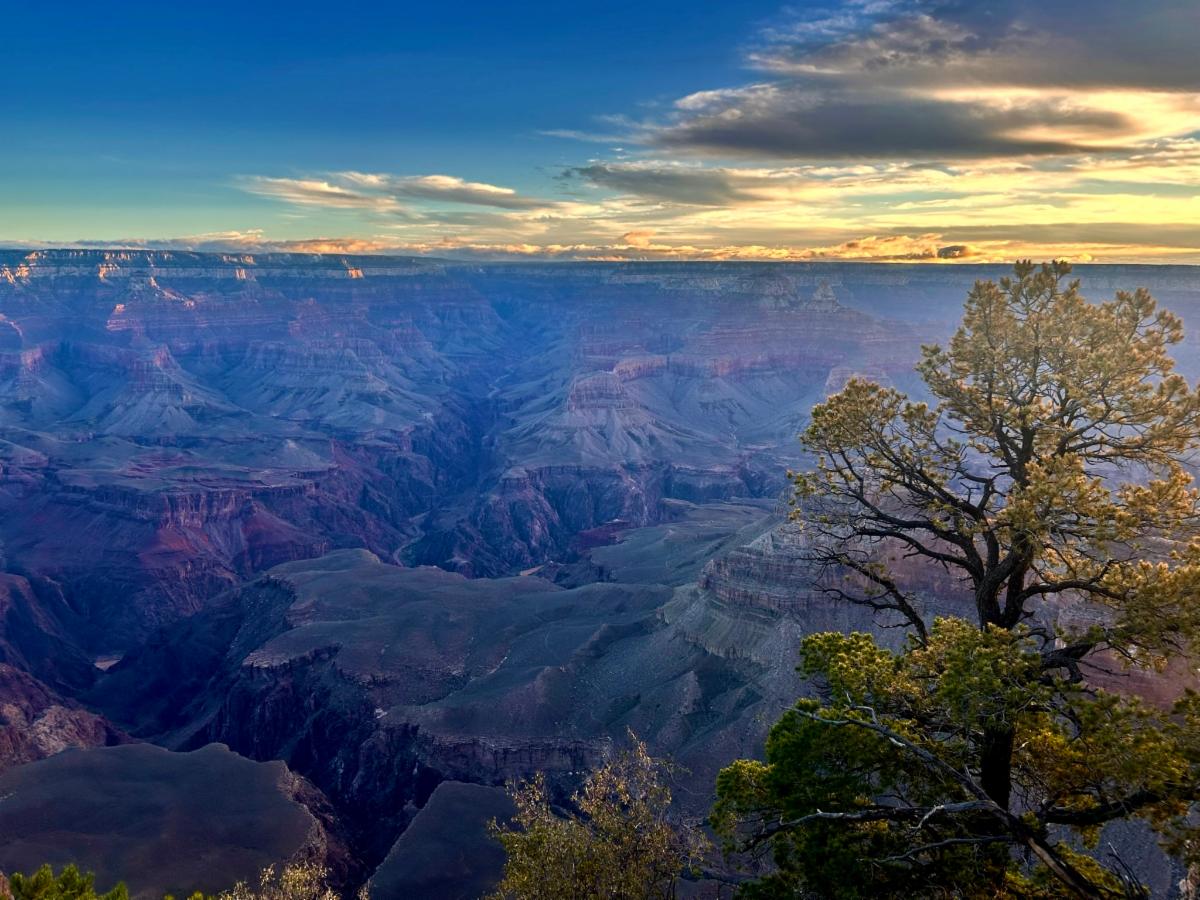
Sunrise Sept. 17 along the South Rim of Grand Canyon National Park, with Bright Angel Canyon visible in the distance. (NPS Photo)
GRAND CANYON, Ariz. — Grand Canyon National Park crews are assessing damage after an additional flash flood moved through Bright Angel Canyon Wednesday afternoon, damaging temporary water infrastructure being constructed as part of the park’s ongoing recovery from the Aug. 29 flood.
There were no reported injuries. With severe weather approaching and flash flood warnings in effect, the National Park Service had reduced the number of personnel working in the canyon. Crews remaining in the area were able to reach safety before the flood moved through. The affected area remains closed to public access.
Today, the National Park Service’s Incident Management Team is assessing damage to the temporary Bright Angel Creek water intake and associated infrastructure. The temporary intake was under construction to help restore water service following damage to the Transcanyon Waterline that delivered water to the South Rim of the Grand Canyon. Once the assessment is complete, crews will determine what repairs or modifications are needed and how the additional damage affects the timeline for restoring a reliable water supply to the South Rim.
The new pipeline infrastructure on the south side of the canyon was not damaged by either flood. The park continues working to bring that infrastructure into service as quickly as possible.
While repairs move forward, water conservation remains critical.
Stage 4 water restrictions remain in effect following the Aug. 29 flash flood. Visitors and residents are asked to conserve water by using designated portable bathrooms, handwashing stations and potable water tanks. When possible, visitors are asked to bring their own water for drinking and other needs.
The park is asking residents, employees, visitors, businesses and partners to continue conserving. To further reduce demand on the South Rim system, potable-water tanks, bottled drinking water, handwashing stations, portable showers, laundry facilities and portable toilets have been deployed throughout the community.
Grand Canyon National Park remains open on both the South Rim and North Rim. Visitors should expect modified operations and closures in affected inner-canyon areas and should check current park conditions before traveling. Visitors to the South Rim are encouraged to arrive prepared with drinking water and to conserve water throughout their visit.
Grand Canyon National Park will continue providing updates as work progresses.
— Grand Canyon National Park, in northern Arizona, encompasses 278 miles (447 km) of the Colorado River and adjacent uplands. Located on the ancestral homeland of 11 Associated Tribes, Grand Canyon is one of the most spectacular examples of erosion anywhere in the world—unmatched in the incomparable vistas it offers visitors on the rim. Grand Canyon National Park is a World Heritage Site. The National Park Service cares for the special places saved by the American people so that all may experience our heritage.