
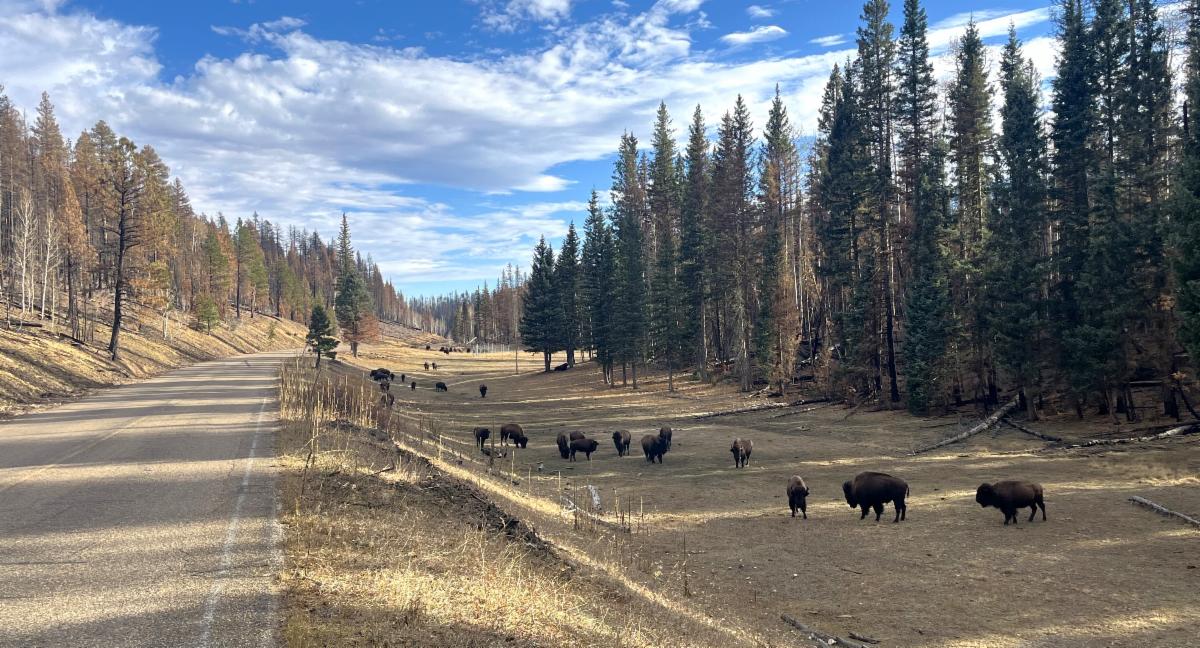
A bison herd along Hwy. 67 on the North Rim of Grand Canyon National Park, Nov. 2025 (NPS Photo/T. Hopp)
GRAND CANYON, Ariz. — Grand Canyon National Park is preparing an adaptive approach for the seasonal reopening of the North Rim, evaluating potential impacts from winter weather to park infrastructure after the Dragon Bravo Fire. The park aims to open popular points of interest, including the North Kaibab Trail, on May 15, weather and conditions permitting.
Park officials emphasize that the guiding principle for the upcoming season is: “We will open what we can, where we can, when we can.” This approach prioritizes visitor safety, resource protection, and operational readiness. Park officials are aware of the challenges of local communities, businesses and our visitors in planning for the 2026 season and are committed to providing specific details about the 2026 North Rim season no later than April 1, 2026.
While the North Kaibab Trail and Arizona Trail typically remain open to visitors year-round, they are subject to closures due to snow, ice, fire-related damage, or necessary infrastructure repairs. Currently, the North Kaibab Trail and portions of the Arizona Trail within the park are closed due to public safety concerns following the Dragon Bravo fire. The park is actively evaluating trail conditions and infrastructure throughout the winter to determine the feasibility of reopening these routes by May 15, 2026.
Superintendent Ed Keable stated, “Our goal is to provide access to the North Rim as quickly and responsibly as possible with an emphasis on safety. We are committed to keeping the public and our partners informed as we learn more about the impacts of winter weather and the Dragon Bravo Fire.”
Visitors and stakeholders are encouraged to stay informed and plan ahead by checking for updates on Grand Canyon National Park’s website and following Grand Canyon National Park on social media.
— Grand Canyon National Park, in northern Arizona, encompasses 278 miles (447 km) of the Colorado River and adjacent uplands. Located on the ancestral homeland of 11 Associated Tribes, Grand Canyon is one of the most spectacular examples of erosion anywhere in the world—unmatched in the incomparable vistas it offers visitors on the rim. Grand Canyon National Park is a World Heritage Site. The National Park Service cares for the special places saved by the American people so that all may experience our heritage.